


If you've seen the news this week, you might be looking at your jewellery box a little differently.
A BBC Watchdog investigation bought 25 pieces of jewellery sold as sterling silver on popular online marketplaces and had them tested by the Sheffield Assay Office. Only two were actually sterling silver. Eight contained illegal levels of cadmium, some at up to 1,000 times the legal limit.
It's a worrying read, especially with so many of us shopping online for Christmas gifts. So here's our guide to telling real sterling silver from the fakes, and what to do if you think you've been caught out.
Why a "925" stamp isn't proof
Genuine sterling silver is made from 92.5% pure silver, which is why it's often stamped 925. (We explain more in our guide to Sterling Silver vs Silver-Plated Jewellery.)
But here's the catch: anyone can stamp "925" on a piece of metal. One of the necklaces in the investigation was stamped 925 and looked shiny and genuine. When it was tested, part of the chain contained just 8.9% silver.
So a 925 stamp tells you what the seller claims the piece is made from. It doesn't prove it.
What a real UK hallmark looks like
A hallmark is different from a simple stamp. It's applied by an independent assay office after the metal has been tested, so it's a guarantee rather than a claim.
A full UK hallmark has three compulsory marks:
- The sponsor's mark: the initials of the maker or company responsible for the piece, inside a shield.
- The fineness mark: "925" for sterling silver, inside an oval shape.
- The assay office mark: the symbol of the office that tested it. That's a leopard's head for London, an anchor for Birmingham, a rose for Sheffield or a castle for Edinburgh.
You might also spot optional marks, like a lion for sterling silver or a letter showing the year it was hallmarked.
Why some genuine pieces aren't hallmarked
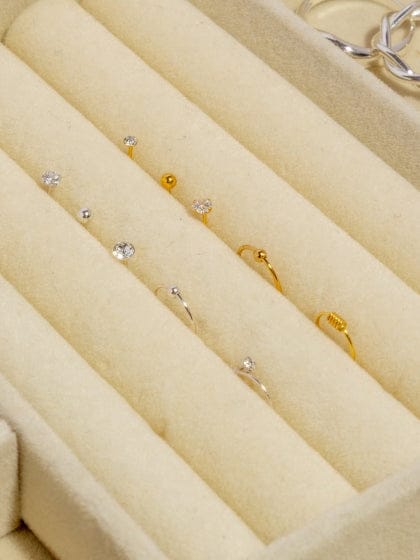
In the UK, silver items weighing under 7.78g don't have to be hallmarked by law. That includes a lot of delicate pieces like stud earrings, fine chains and small pendants.
So a missing hallmark on a tiny pair of studs isn't necessarily a red flag. It just means the stamp alone can't tell you much, and it's worth knowing who you're buying from.
Red flags to look out for
- A price that's too good to be true. Silver is a precious metal with a real market value. The investigation included a "sterling silver" bracelet for £1.55 and earrings for £1.99. At those prices, it's very unlikely to be the real thing.
- Itchy or irritated skin. Sterling silver shouldn't contain nickel, one of the most common causes of jewellery allergies. If a new "silver" piece is making your skin red or itchy, that's a warning sign.
- A colour that looks off. Real silver can tarnish over time, but it shouldn't look brassy, yellowish or patchy when it's new.
- Vague listings. Look for sellers who clearly state what a piece is made from. Phrases like "silver tone" or "silver colour" usually mean it isn't silver at all.
- No way to ask questions. A good jeweller will always be happy to tell you exactly what's in your jewellery. If you can't get a straight answer, shop elsewhere.
How to check your silver at home
There are a few quick checks you can do with things you already have. None of them can prove a piece is sterling silver (only proper testing can do that), but they can help you spot a fake.
- Look closely for marks. Use a magnifying glass or your phone camera zoomed in. Check the clasp, the back of pendants, the inside of rings and the posts of earrings for a 925 stamp or a full hallmark.
- Try a magnet. Silver isn't magnetic, so if your piece sticks firmly to a fridge magnet, it isn't solid silver. Just test the main part of the piece, as some clasps have tiny steel springs inside. A piece that doesn't stick isn't automatically silver, because lots of cheaper metals aren't magnetic either.
- Do the ice test. Silver conducts heat brilliantly. Place an ice cube on your piece (or on a larger silver item) and it should start melting noticeably faster than on other metals.
- Rub it with a white cloth. Real silver tarnishes, so rubbing it with a soft white cloth or polishing cloth will often leave dark marks behind.
- Watch your skin. Sterling silver shouldn't make your skin red, itchy or irritated. If a new piece does, it may contain nickel or other cheaper metals.
Avoid scratching, filing or using acid tests at home, as these can damage your jewellery. If you're still unsure, a jeweller or assay office can test it properly without harming it.
Why it matters: nickel and cadmium
Fake silver isn't just disappointing. Some of the metals used in cheap jewellery can be harmful, which is why there are strict legal limits on them in the UK.
- Nickel can cause skin irritation and allergic reactions. One necklace tested in the investigation contained up to 11% nickel in part of its chain.
- Cadmium is a toxic metal linked to cancer. The legal limit in jewellery is 0.01%, but some pieces tested contained up to 10%. The biggest risk is if it's swallowed or breathed in, so it's a particular worry for pieces worn by children, or earrings that could end up in someone's mouth or food.
Already bought something you're unsure about?
Don't panic, but don't ignore it either.
- Stop wearing it if it's irritating your skin, and keep it away from children.
- Contact the seller or marketplace. Several have issued recalls and refunds since the investigation, and the shopper whose necklace was tested received a full refund.
- Check your rights. If a piece was sold as sterling silver and isn't, it hasn't been sold as described. Selling fake sterling silver also breaks the Hallmarking Act.
- Get it tested if you're still unsure. UK assay offices can test jewellery for you.
How we do it at Essential Jewellery
Here at Essential Jewellery, all of our jewellery is genuine 925 sterling silver, and many of our pieces are crafted from recycled sterling silver.
We don't just take our suppliers' word for it, either. We send samples of our jewellery to the assay office for independent testing, so we know our silver is exactly what we say it is.
Many of our pieces also carry a full UK hallmark from the London or Birmingham Assay Office. Some of our more delicate pieces fall under the 7.78g weight limit, so they're stamped 925 rather than hallmarked, but they're held to exactly the same standard.
If you ever want to know exactly what your jewellery is made from, just get in touch or pop into one of our stores. We're always happy to talk silver.
Want to learn more? Read our guide to Sterling Silver vs Silver-Plated Jewellery or go behind the scenes on how your jewellery is made.